Modern Multidimensional Geometry
Shapes have Property Sequences
Shapes have properties.
| Cube dimensional names | |||||
|
0-cube point |
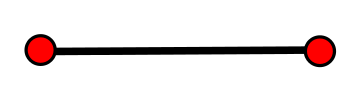
1-cube line |
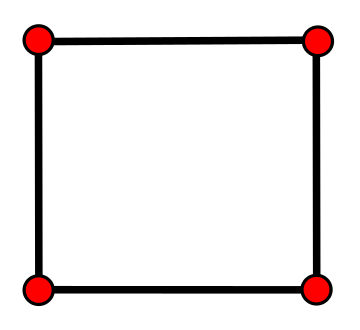
2-cube square |
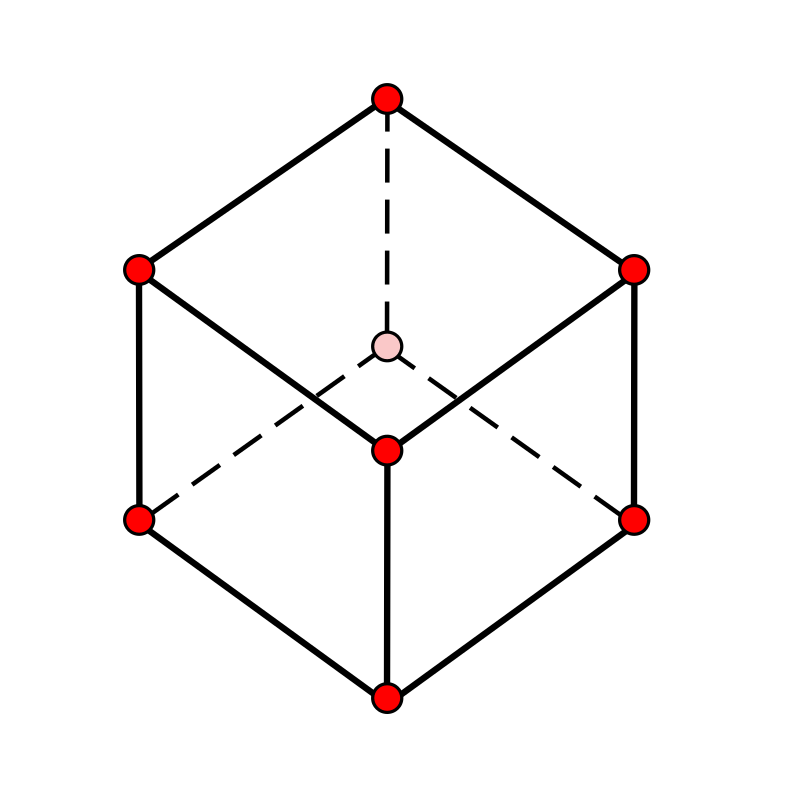
3-cube cube |
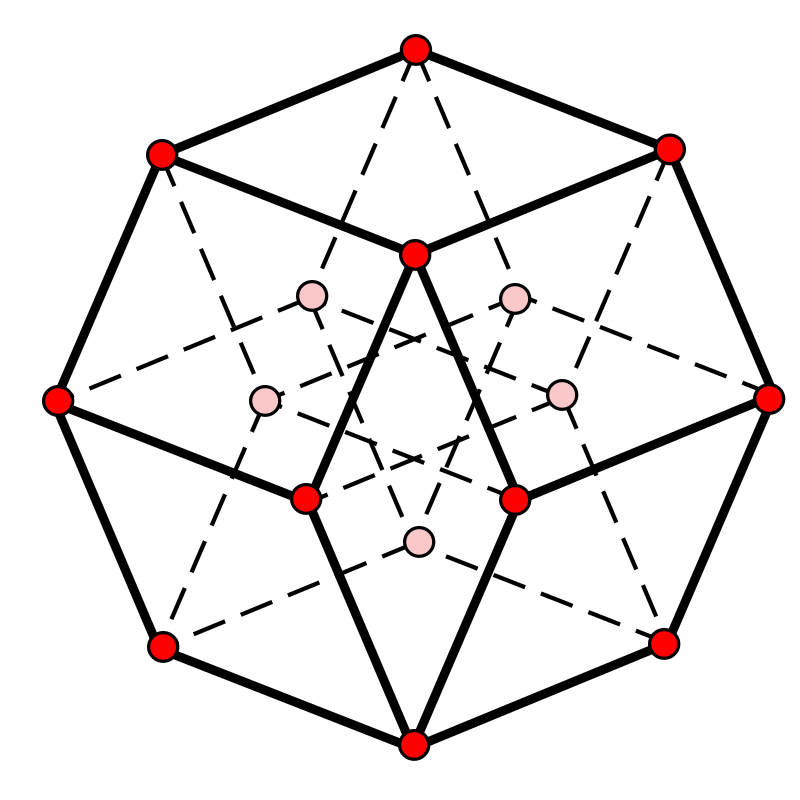
4-cube tesseract |
5-cube penteract |

|
|
|
|
|
|
| Number of vertices formula: 2n where n is the number of dimensions. | |||||
| 20 = 1 | 21 = 2 | 22 = 4 | 23 = 8 | 24 = 16 | 25 = 32 |
| Bounded space | |||||
|
0-space location |
1-space distance |
2-space area |
3-space volume |
4-space hypervolume |
5-space 5D hypervolume |
| Sample bound volume of space calculated | |||||
| 0 units | 31 = 3 units | 32 = 9 square units | 33 = 27 cubic units | 34 = 81 quartic units | 35 = 243 unit5 |
| Space is bounded by: | |||||
| Nothing bounded | 2 end points | 4 edges(line segments) | 6 squares(2-cubes) | 8 cubes(3-cubes) | 10 4-cubes |
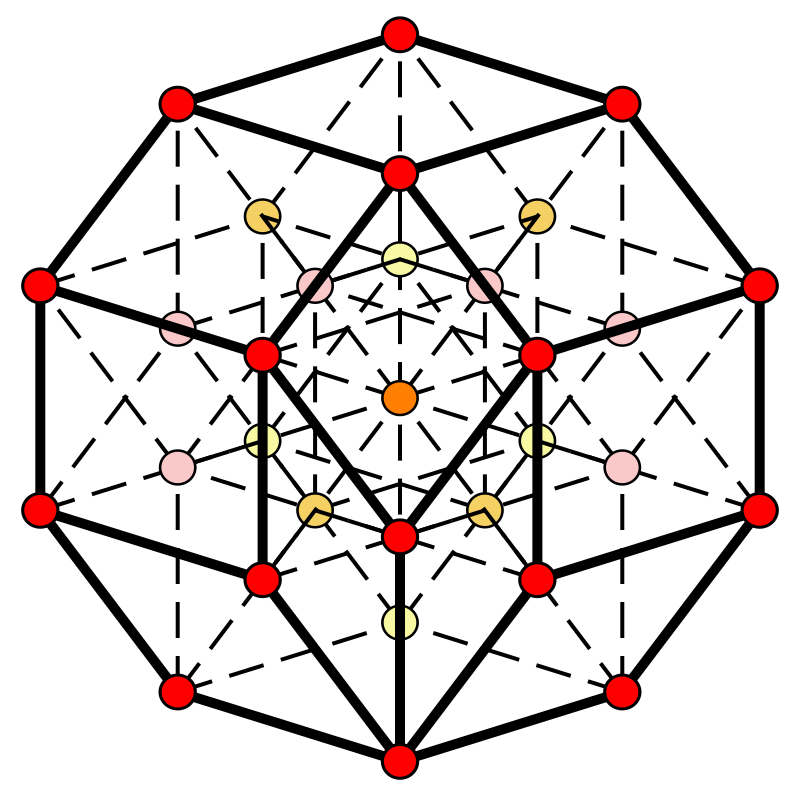
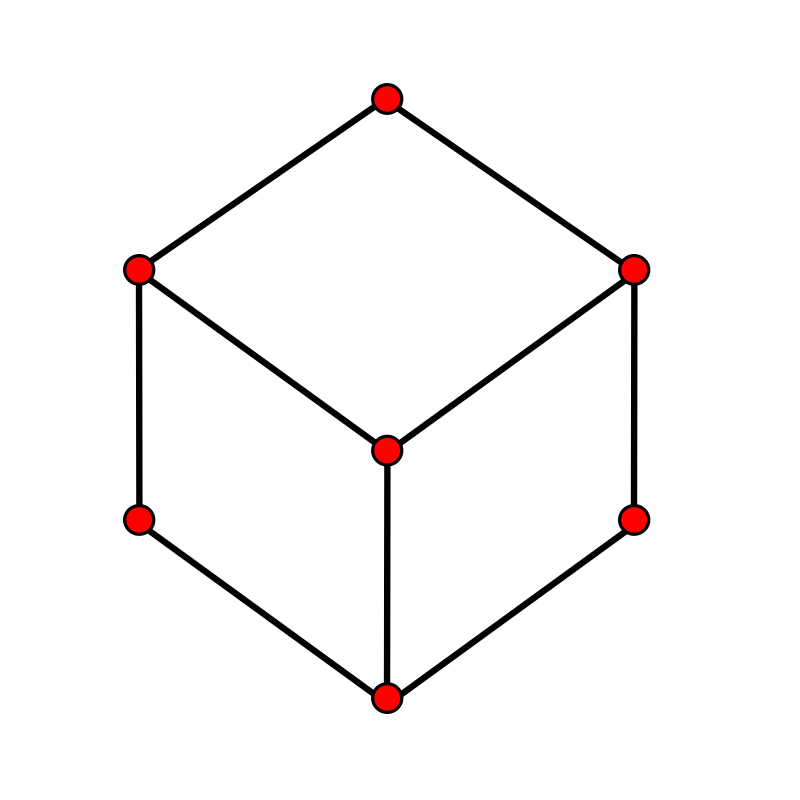
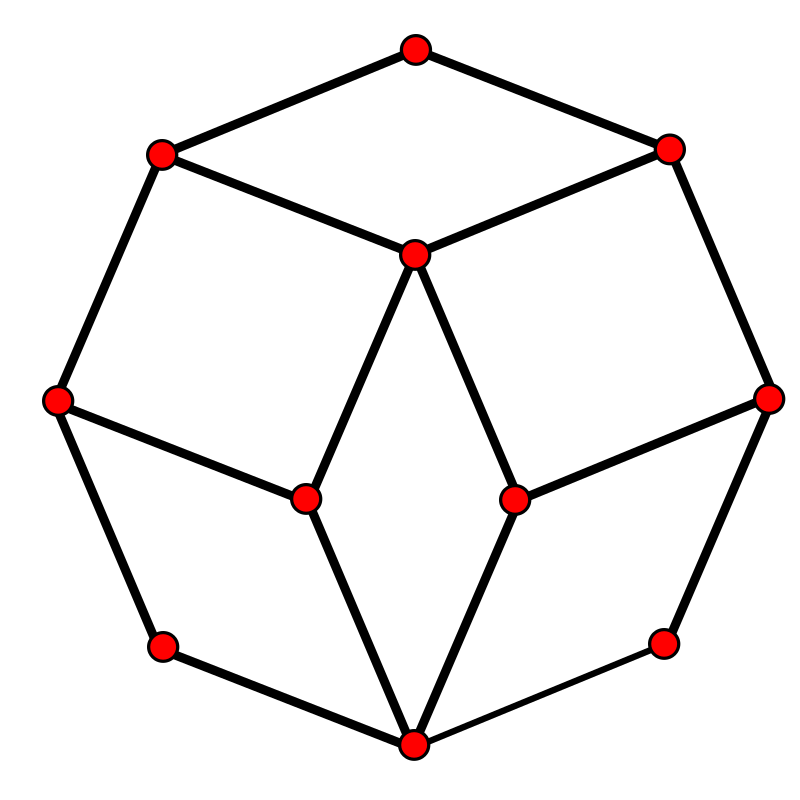
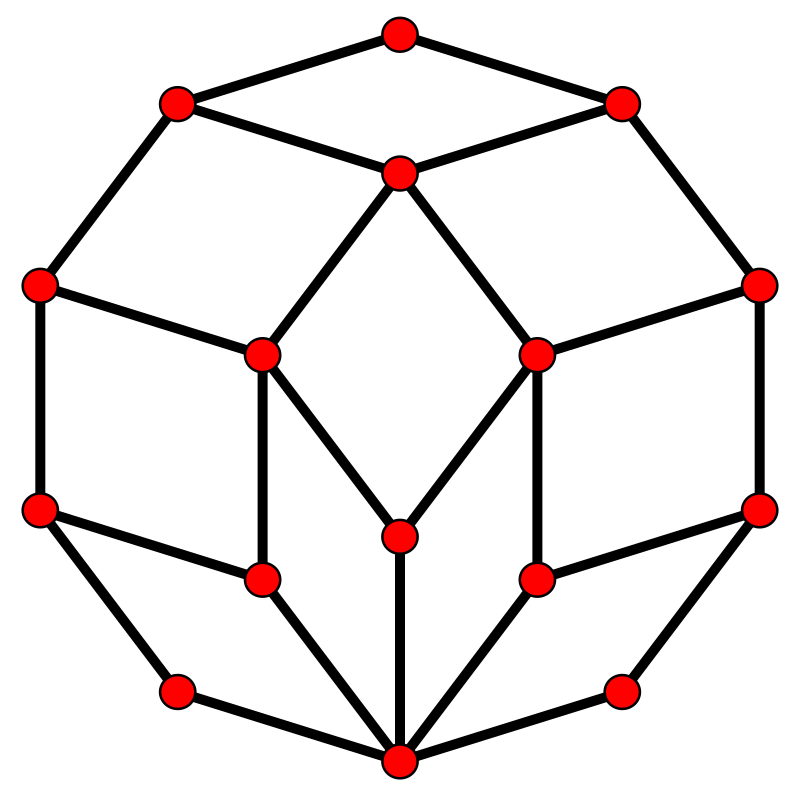
| N-cubes as 3D solids. N-cubes drawn in three dimensions without hidden lines. | |||||
| Point | Line | Square | Cube | Rhombic dodecahedron | Rhombic triacontahedron |
|
|
|
|
|
|
|
|
Formula for the number of faces on the solid shapes: (n−1)n for n≥2
where n is the number of dimensions.
Formula for the maximum number of visible faces on the above diagrams: (n−1)n/2 for n≥3 where n is the number of dimensions. |
|||||
| (2-1) x 2 = 1 |
(3-1) x 3 = 6
6/2 = 3 |
(4-1) x 4 = 12
12/2 = 6 |
(5-1) x 5 = 20
10/2 = 10 |
||
Background
People first drew points and lines. Lines were used to draw polygon shapes of two dimensions such as triangles and squares. Polyhedra were next, solid objects of three dimensions such as a cube, a polyhedron. A cube has 6 flat polygonal faces, 12 straight edges and 8 sharp corners called vertices.
| In the beginning... | |||
| point | line | Polygon: square | polyhedron: cube |
|
|
|
|
|
This lead up to the study of polytopes which are the generalization of polygons and polyhedra into any number of dimensions. A polyhedron is a 3D polytope. A tesseract is a hypercube, a 4-cube, a 4D polytope.
The mid to late 1800's were a boom time for the geometry of multiple dimensions. Riemann developed his multidimensional geometry, Riemann geometry in 1854.
The study of polytopes beyond three dimensions began in the mid 1800's. The British mathematician Alicia Boole Stott introduced the term polytope into English in her paper on regular four-dimensional hypersolids, published 1900. She was a woman who had brilliant influences. Her father George, developed boolean logic, which is fundamental to computer programming. Her brother-in-law was Charles Howard Hinton, author of the book, The Fourth Dimension(1904). He coined the word tesseract as the name for a 4-cube.
Hinton had crafted 4D models with wooden cubes and shared these with Alicia. Alicia wrote about the use of geometric models for early childhood mathematical education. Someone should follow her lead and add polytopes and hidden lines into Khan Academy, a premier educational website for the young.
Donald Coxeter was top geometer of this age, a professor at the University of Toronto. 1930, Alicia Boole Stott collaborated with Donald Coxeter. They went on to present a joint paper at the University of Cambridge.
Applying Multidimensional Geometry
Riemann geometry was used by Einstein in his four dimensional general theory of relativity in the early 1900's. From Einstein's special theory of relativity, Minkowski developed spacetime four dimensional geometry.
Polytopes
The modern part of geometry which I refer, is the study and construction of polytope geometric diagrams. To simplify the drawing of multidimensional hypercubes, take the established two dimensional projected cubes and draw them with hidden lines in three dimensions. Then, remove the hidden lines to have a much simpler representations. When this is done with cube it becomes a regular three dimensional closed box that could be sitting on your desk.
| N-cubes drawn as three dimensional solids. | ||
| 3-cube | 4-cube | 5-cube |
|
|
|
|
| N-cubes projected into two dimensions. | ||
|
|
|
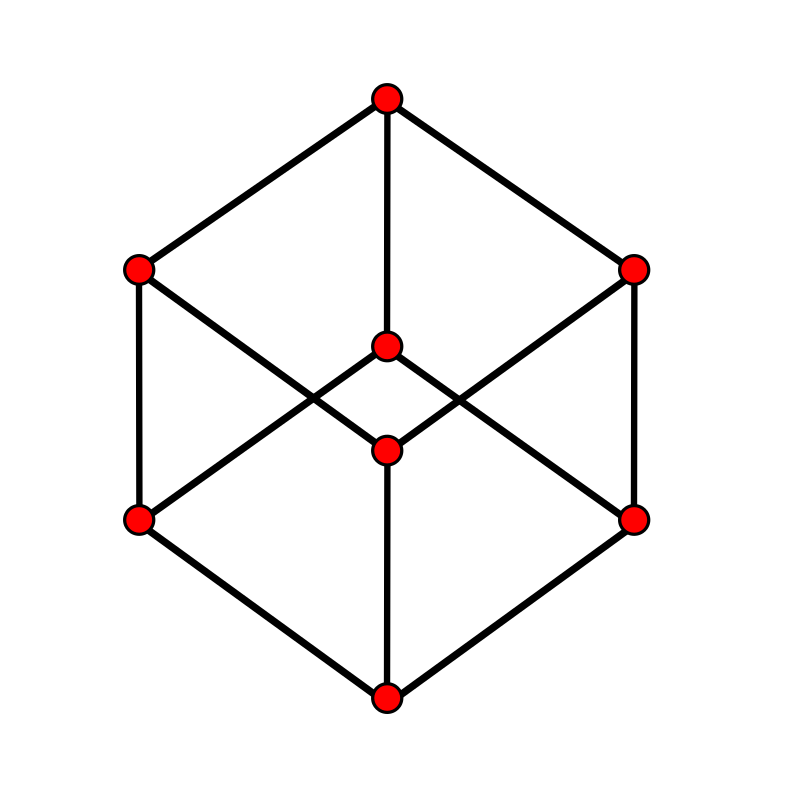
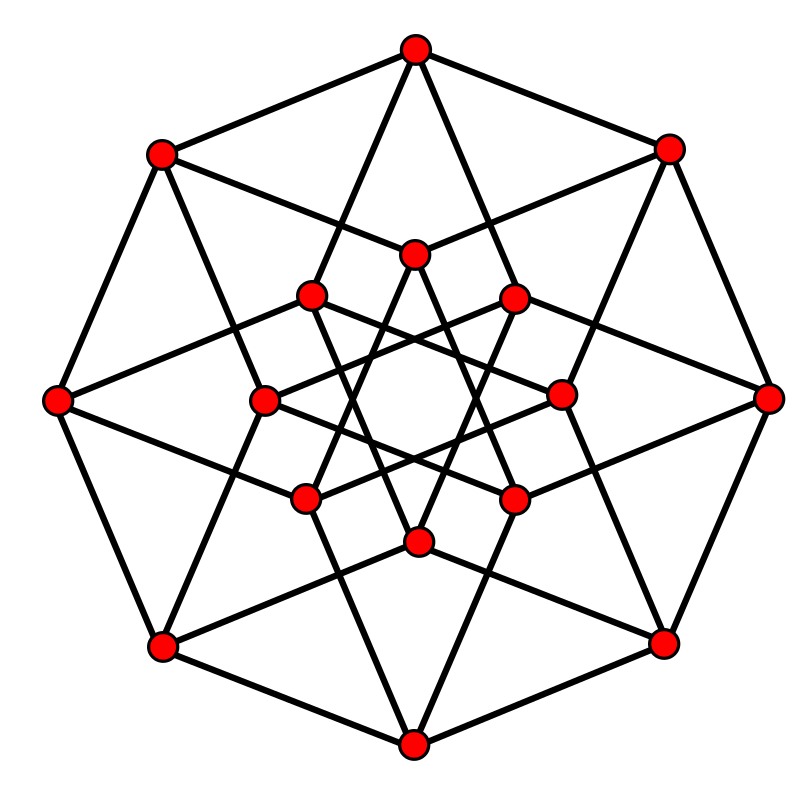
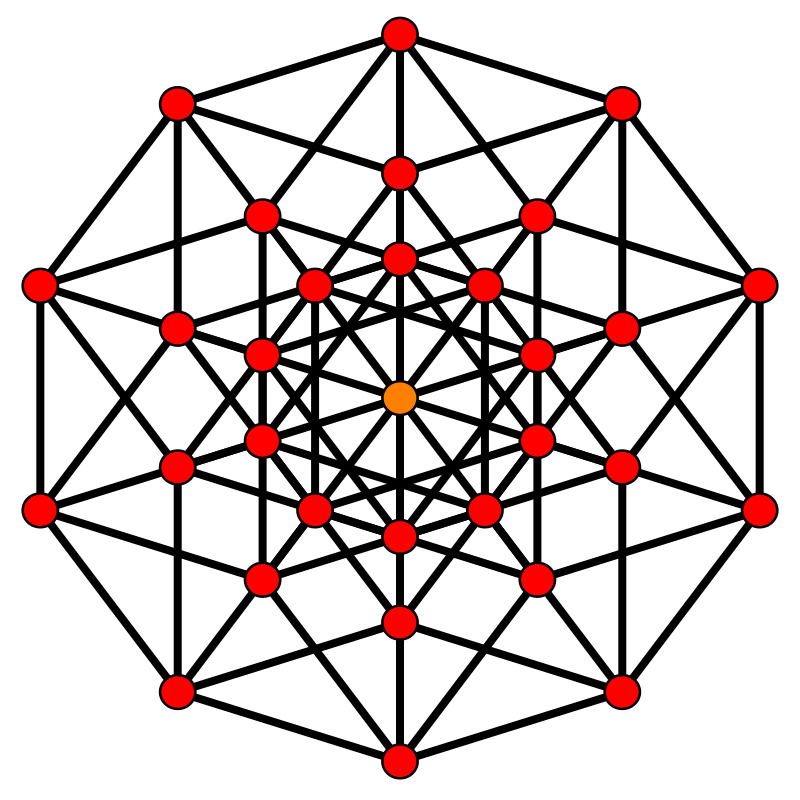
The above top row are three dimensional n-cube solids.
They are much simpler to picture in your mind than the lower row cubes.
The above lower row cubes are two dimensional
Coxeter plane projection
cubes(B3, B4, B5).
2D Mathematical Geometric Diagrams in 3D N-Cubes
Polytopes are from the generalization of polygons and polyhedra into any number of dimensions. The following demonstrates the bridge between three dimensional n-cubes and two dimensional orthographic projected cubes(B3, B4, B5) found on Wikipedia. The orthographic projections are multidimensional hypercubes projected onto a plane (2D). They are accepted n-cube diagrams. The three dimensional n-cubes with hidden lines and hidden lines removed, are new.
|
2D Projections
2D orthographic projections from Wikipedia |
3D N-cube Frames
3D projections as posted on Wikipedia |
3D Solids
with hidden lines removed as posted on Wikipedia |
| B3 Coxeter plane element | 3-cube with hidden lines |
3-cube, a closed box
Cube |

|
|
|
| B4 Coxeter plane graph | 4-cube with hidden lines |
4-cube
Rhombic dodecahedron |

|
|
|
| B5 Coxeter plane graph | 5-cube with hidden lines |
5-cube
Rhombic triacontahedron |

|
|
|
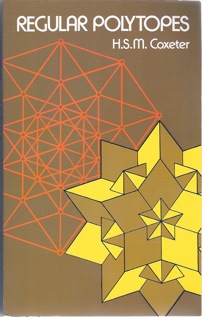 The B5 Coxeter plane graph was used on the cover of
Regular Polytopes
by Donald Coxeter.
The B5 Coxeter plane graph was used on the cover of
Regular Polytopes
by Donald Coxeter.
The B5 is featured on page 244.
Regular Polytopes taught me more about how properties from 2 and 3 dimensional shapes and solids, extend into more dimensions. For example, the space contained within a shape, is a property that can be extended to many dimensions:
- Line segment edges(1D) in polygons(2D), contain area.
- Polygon faces(2D) in polyhedra(3D), contain volume.
- Cubes(3D) in a 4-polytope(4D), contain hypervolume.
To gain acceptance for his geometry, Donald Coxeter had linked his geometry to conventional algebraic geometry. This was his breakthrough to get acceptance from the algebraic geometric mathematicians. I've gotten acceptance for my three dimensional cubes by geometric mathematicians by demonstrating the link from my diagrams to the Coxeter based geometric diagrams of which they are already familiar.
The following series of images are n-cube Coxeter plane projections in Coxeter groups: B2 to B8, redrawn as three dimensional solids. The images are hypercubes projected into three dimensions with opaque faces which makes them look like common solids:
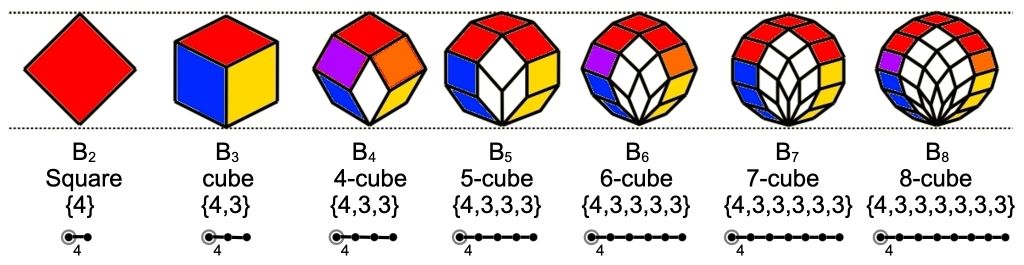
See Wikipedia Coxeter plane for more n-cube projections.